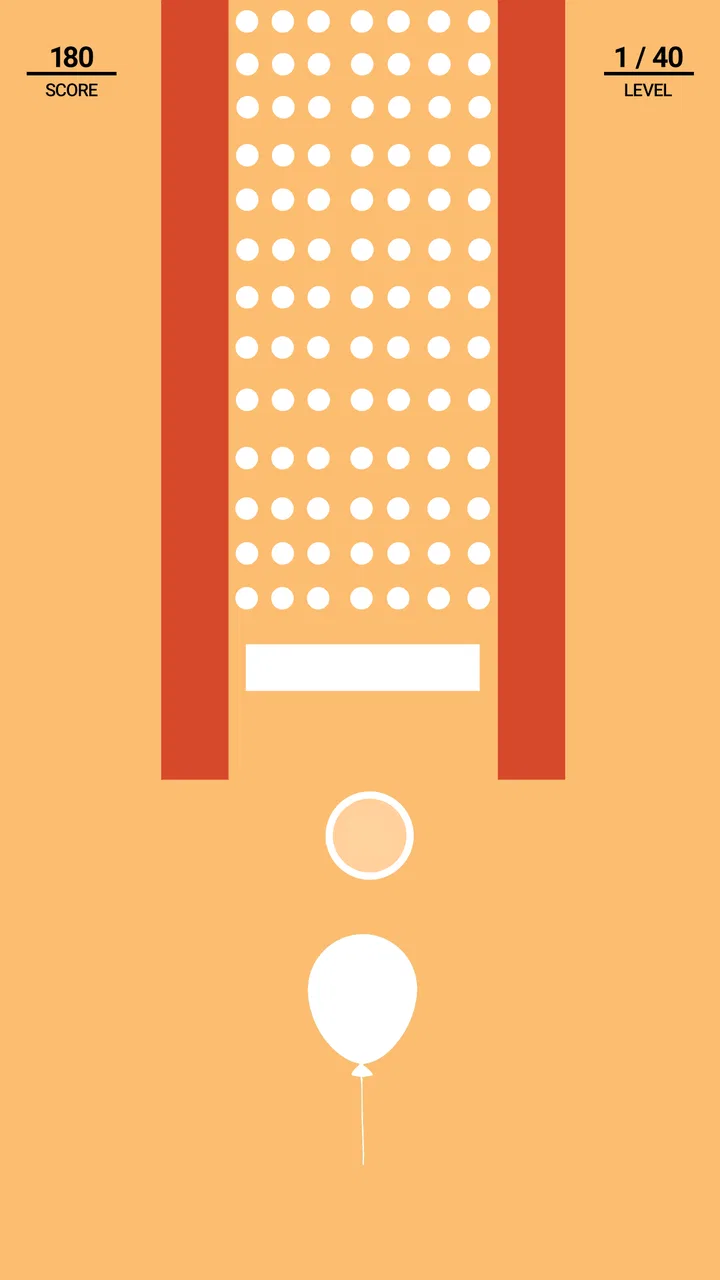
Rise Up: Balloon Game
- 3.8
- Rating
- 100.00M
- Installs
- Free
- Price

 Analysis by App-foxy
I found Rise Up: Balloon Game easy to understand within seconds, but much harder to master than its simple appearance suggests. The idea is direct: keep a balloon safe while it moves upward, using a protective shield to clear obstacles from its path. That single action creates short, tense rounds that work well when I only have a few minutes, yet the later stages demand patience, timing, and a willingness to repeat the same challenge until my reactions improve.
As a free arcade game from CASUAL AZUR GAMES, it is aimed at almost anyone who enjoys quick touch-screen challenges. Its Everyone rating makes it approachable for younger players as well as adults, although the rising difficulty can feel surprisingly demanding. The game has been available since March 31, 2018, and its popularity is clear from more than 100 million installs. I think that broad reach comes from the fact that there is no complicated setup or long explanation before the first attempt.
What to Expect When You Start Playing
The first impression is deliberately minimal. You are not managing a character, building a collection, or learning a large set of controls. Instead, your attention stays on the balloon and the moving shield. The screen presents a path filled with hazards, and your job is to position the shield so those hazards do not reach the balloon. The controls feel natural on a phone because the shield follows your finger, making the connection between movement and result immediate.
You May Also Like

 Blood Strike: 2.5 Anniversary
Blood Strike’s Loadouts Turn Every Drop Into a Tactical Gamble
A close look at Blood Strike’s custom loadouts: how fast access to signature weapons reshapes its battle royale rhythm, rewards preparation, and narrows the gap between fights.

 Pandora - Music & Podcasts
Pandora’s Music Is Easy to Start, but Harder to Recover
Pandora’s strength is its low-effort path from a seed to a station. Its weak spot is how much confidence it asks you to place in connection, setup, and quiet recovery.

 8 Ball Pool
 Is Built on Rivalries, Rematches, and Routine
A close look at the rivalries, rematches, shared routines, and unanswered safety questions that turn a quick pool match into a persistent mobile community.

 Samsung Music
’s Quiet Strength Is Playing What You Already Own
Its reach comes less from spectacle than from dependable access to a personal library. That simplicity is both the app’s strongest retention engine and its ceiling.

 AccuWeather: Weather Radar
AccuWeather Review: A Quick, Clear Forecast for Everyday Decisions
For everyday plans, the best forecast is the one you can understand quickly. AccuWeather makes rain timing, radar, and local conditions easy to act on, with a few trade-offs.

 Hill Climb Racing
Why Hill Climb Racing Still Turns Crashes Into One More Run
A tiny car, a bumpy hill and one more upgrade: Hill Climb Racing keeps resurfacing because its simple chaos makes every near-miss feel personal.
More From Our News Desk
View All News


That simplicity is also the main source of the challenge. The balloon continues its upward journey, so I cannot spend too long planning a perfect route. I have to read the next obstacle, move the shield into place, and then quickly prepare for what follows. A small movement can be useful when an obstacle is close, while a large swipe can create a new problem if I overcorrect. The game rewards controlled motion more than frantic tapping.
Each attempt feels like a compact test of spatial awareness. I am not simply steering the balloon around objects; I am using the shield as a moving barrier. That distinction matters because the shield can protect the balloon while being positioned away from its center. Once I understood that, I stopped trying to chase the balloon directly and began thinking about the safest position between it and the next danger.
The store summary highlights the ambition of reaching level 100 with all the balloons, and that gives the progression a clear long-term target. I would not treat that goal as a promise of a relaxed journey. The appeal is precisely that the game asks for increasingly careful play. A player who wants instant victories may lose interest, while someone who enjoys improving through repeated attempts will find a stronger reason to continue.
There is also a useful rhythm to the experience. I can play one attempt while waiting for a bus, then put the phone away without needing to remember a complicated storyline. On another day, I can spend longer trying to pass a section that defeated me earlier. This makes it a better fit for short sessions than for players seeking a deep campaign or a large world to explore.
The kind of player who will enjoy it
I would recommend it to people who like arcade games based on reflexes, positioning, and quick decisions. It is especially suitable if you enjoy seeing a mistake immediately and knowing that a slightly better movement might solve the problem next time. The game can also work as a light concentration exercise: before moving, I need to notice the shape of the obstacle, the available space, and the balloon’s position.
It is less suitable for anyone looking for calm, predictable progress. Repetition is part of the design, and the later challenge can make a short session feel intense rather than relaxing. Players who prefer puzzles with unlimited time, story-driven games, or games where upgrades make progress steadily easier may find this format too narrow.
Installing it and making the first attempt
The game is free to install, and it runs on Android devices using version 8.0 or later. The current version is 300000.8.0. I would check the operating system before downloading, particularly on an older phone, because compatibility is the first practical question for a new player. Once installed, the important step is not searching through menus; it is getting into the first playable screen and learning how the shield responds to a finger.
My advice is to begin with small movements rather than dragging across the entire display. A short, deliberate swipe lets you see how much the shield travels and makes it easier to correct a mistake. During the first few attempts, I would focus less on reaching a high level and more on answering three simple questions: how quickly the balloon rises, how directly the shield follows the finger, and how much room remains around each obstacle.
That first familiarization is more valuable than trying to move constantly. New players often assume that the shield should remain directly over the balloon at all times. In practice, I found it more useful to place it where the next threat will arrive. This small change in thinking is one of the earliest meaningful improvements because it turns the game from reactive chasing into short-term planning.
From the First Safe Move to Reliable Progress
I find the first reliable improvement comes from changing how I read each obstacle, not from swiping faster. I try to keep a little room to correct the shield and notice what lies beyond the immediate threat, so one safe move does not leave me stranded for the next one. That habit gives me a clearer way to judge progress as the challenges become more demanding.
How I reached the first meaningful success
My first useful breakthrough came when I stopped treating every obstacle as an emergency. The balloon’s route gives me a brief chance to read what is ahead. Instead of making several nervous corrections, I moved the shield once, watched the obstacle approach, and adjusted only when necessary. That reduced accidental gaps and made the result feel much more consistent.
A practical routine is to keep the shield near the side of the balloon where the next obstruction appears, then shift it smoothly as the path changes. This is not about memorizing one permanent position because the arrangement can require different responses. It is about preparing for the immediate threat without losing awareness of the balloon itself. I found that looking slightly ahead, rather than staring only at the balloon, improved my timing.
Another useful habit is to avoid holding the shield at an extreme edge unless the obstacle truly demands it. When the shield is too far away, I may need a long movement to recover, and that recovery can arrive too late. Keeping a little room for correction gives me more options. This is a small but important trade-off: a position that looks safe for one moment may be awkward when the next obstacle appears from another direction.
When I failed, I tried to identify the exact cause instead of immediately repeating the same movement. Sometimes the problem was speed; sometimes I had placed the shield correctly but moved it away too early. That distinction matters. If I only blame my reflexes, I learn nothing. If I notice that I abandoned a safe position before the balloon passed, the next attempt has a clear adjustment.
Common confusion about the shield and the balloon
The most common misunderstanding is expecting the shield to behave like a fixed wall around the balloon. It is better understood as a movable protector that I must actively guide. It does not remove the need to watch the path, and placing it near the balloon is not automatically enough. The shield’s location in relation to the approaching obstacle is what determines whether the move is useful.
Another point that took me a few attempts to appreciate is that speed is not always the answer. Fast swipes can feel responsive, but they also make it easier to pass the safest position and create a new opening. Slow, measured movements are often stronger when the obstacle is already close. I use faster movement only when the shield clearly needs to cross a large part of the screen before the balloon reaches danger.
It is also easy to focus so intensely on one obstacle that the next one becomes a surprise. I now try to clear the immediate danger while briefly checking the route beyond it. This split attention is one of the game’s real skills. The best move is not necessarily the one that protects the balloon for the next second; it is the one that leaves the shield in a useful position afterward.
Players may also wonder whether the game is intended to be completed in one smooth run. I do not see it that way. Its arcade structure encourages attempts, mistakes, and gradual improvement. Reaching a higher level is satisfying because it reflects better control, not because the game removes the challenge after a few successful rounds. If you approach it expecting every session to produce obvious progress, frustration can arrive quickly.
How to make short sessions more productive
For a brief everyday session, I would set a small target before starting. That could mean surviving one difficult section, learning the movement needed for a particular obstacle pattern, or simply completing an attempt without making rushed gestures. A narrow target keeps the game from becoming an endless cycle of unexplained failures.
A good example is playing during a five-minute wait. On the first attempt, I would watch the shield’s movement and accept that the run may end early. On the second, I would repeat the opening with smaller corrections. On the third, I would concentrate on the first point where the earlier attempt failed. This approach turns idle time into focused practice instead of random retries.
I also recommend taking a break after several unsuccessful attempts. Because the controls are simple, it is tempting to assume that one more try must solve everything. In my experience, frustration makes my gestures larger and less precise, which is exactly the wrong response for this game. Returning later with calmer attention can be more effective than continuing immediately.
Sound and surroundings can influence how comfortable the game feels, even though the core action remains visual. I prefer playing when I can keep my eyes on the upper part of the path instead of being interrupted. If I am multitasking or frequently looking away, this is not the kind of arcade game that forgives much missed information. It is better for a short, focused pause than for background play.
Where the free model fits into the experience
The game is free, which makes trying it straightforward. It includes in-app purchases ranging from $0.49 to $59.99 per item, so I would approach optional spending carefully and decide in advance whether I want to keep the experience entirely free. For me, the basic attraction is the movement challenge itself, not the need to buy something to understand how the game works.
That pricing range is worth keeping in mind for families. The Everyone age rating makes the game broadly accessible, but a child using a shared device may still encounter purchase options. I would use the device’s normal purchase controls and supervision tools rather than assuming that an arcade game’s simple presentation means every spending decision is equally simple.
The large audience—around 1.4 million ratings and roughly 47,000 reviews—suggests that many players have spent enough time with it to form a clear opinion. Its average rating of 3.8 is more useful to me as a sign of mixed reactions than as a verdict. I can understand why: the game is immediately playable, but its repetition and demanding control can divide players. Those who enjoy precision may keep returning, while others may feel the core idea becomes familiar too quickly.
How it compares with other arcade choices
Compared with endless runners, this game gives me more direct control over a protective object than over a character. I am not mainly choosing lanes or jumping at fixed moments; I am continuously positioning the shield in relation to danger. That makes the experience feel more like a live spatial puzzle, even though it remains firmly an arcade game.
Compared with match-style puzzle games, it offers less room for leisurely planning and fewer opportunities to recover from a poor decision. The reward comes from timing and hand control rather than arranging pieces or building a long chain. If I want a game that lets me pause and calculate, I would choose a traditional puzzle alternative. If I want immediate feedback from every finger movement, this one is more compelling.
It also differs from progression-heavy arcade games because the central skill is not collecting a large set of tools or learning many abilities. The shield and the balloon remain the focus. That narrow design is a strength when I want clarity, but a weakness when I need variety. Players should choose it for the quality of its central challenge, not for a broad collection of game modes.
Who should skip it
I would skip this game if repeated failure quickly makes you angry, especially when the failure comes from a small movement that seemed harmless. I would also choose another game if you need a strong narrative, character development, or a relaxing pace. The balloon’s journey is a framework for reflex play, not a story that gradually reveals new emotional or strategic layers.
It may not be the best choice for very old devices that struggle with newer software requirements, since Android 8.0 is the minimum operating system. I would also avoid introducing it as a quiet activity for a young child who becomes frustrated easily. The Everyone rating describes broad suitability, but the difficulty still requires patience and controlled attention.
My next-step recommendation
After the first successful run, I would not immediately chase the level 100 goal. I would first try to repeat the same section with fewer unnecessary shield movements. Consistency is a better measure of improvement than one lucky escape. Once the opening feels reliable, I would focus on the next obstacle that causes trouble and create a specific response for it.
One advanced habit is to review the final movement before each failure. Ask whether the shield was too close, too far, moved too early, or moved too late. That simple self-check turns the game into a small training loop. It also prevents the most common waste of time: repeating a gesture without understanding why it failed.
After spending time with it, I see Rise Up as a focused arcade game with a strong first-minute hook and a demanding long-term curve. I like that I can begin without studying instructions, and I appreciate that better results come from calmer movement rather than complicated systems. At the same time, the limited central mechanic will not satisfy everyone, and the repetition can become tiring if I play for too long.
My recommendation is straightforward: try it if you want a free, touch-controlled challenge that fits into short breaks and gives you an obvious skill to improve. Start with small swipes, watch the route ahead, and treat every failure as information about positioning. If you want deep variety or a gentle, low-pressure game, choose another arcade option. For players who enjoy protecting a fragile target through increasingly careful movements, though, this is a surprisingly demanding little game that earns its place on a phone.
FAQs for Rise Up: Balloon Game
01What is the main objective of Rise Up: Balloon Game?
In Rise Up: Balloon Game, your primary goal is to protect a balloon as it ascends into the sky. You do this by maneuvering a protective shield to clear obstacles out of its path. The game tests your reflexes and decision-making skills, making it an engaging and challenging experience.
02Is Rise Up: Balloon Game free to play?
Yes, Rise Up: Balloon Game is free to download and play on both Android and iOS platforms. However, it offers in-app purchases that allow players to enhance their gaming experience, such as removing ads or unlocking certain features more quickly. This is common in many mobile games.
03What are the system requirements for Rise Up: Balloon Game?
To run Rise Up: Balloon Game smoothly, your device should have a minimum of iOS 9.0 or Android 5.0. The game is optimized for both smartphones and tablets, ensuring a seamless playing experience. Make sure your device has enough storage space and is updated to the latest software version for optimal performance.
04How can I control the shield in Rise Up: Balloon Game?
The shield in Rise Up: Balloon Game is controlled by your finger on the screen. You move the shield by dragging your finger around to clear obstacles out of the balloon's path. The intuitive touch controls are designed to be responsive, providing a smooth gaming experience.
05Does Rise Up: Balloon Game offer multiplayer options?
Currently, Rise Up: Balloon Game does not support multiplayer modes. It’s designed as a single-player experience where players focus on beating their own high scores. However, players can share their scores on social media or compete with friends by comparing progress, adding a social element to the game.
Pros
- Simple and intuitive controls.
- Challenging levels keep you engaged.
- Smooth graphics and animations.
- Minimal ads enhance gameplay.
- Quick load times and performance.
Cons
- Repetitive gameplay might bore some.
- Limited power-ups for variety.
- No offline mode available.
- Can be frustratingly difficult.
- Occasional lag on older devices.

Rise Up: Balloon Game
Gallery